

Game Art Services That Scale: Style, Speed, and Performance for Live Pipelines
- January 22, 2026
- Posted by: iXie
- Category: Game Art
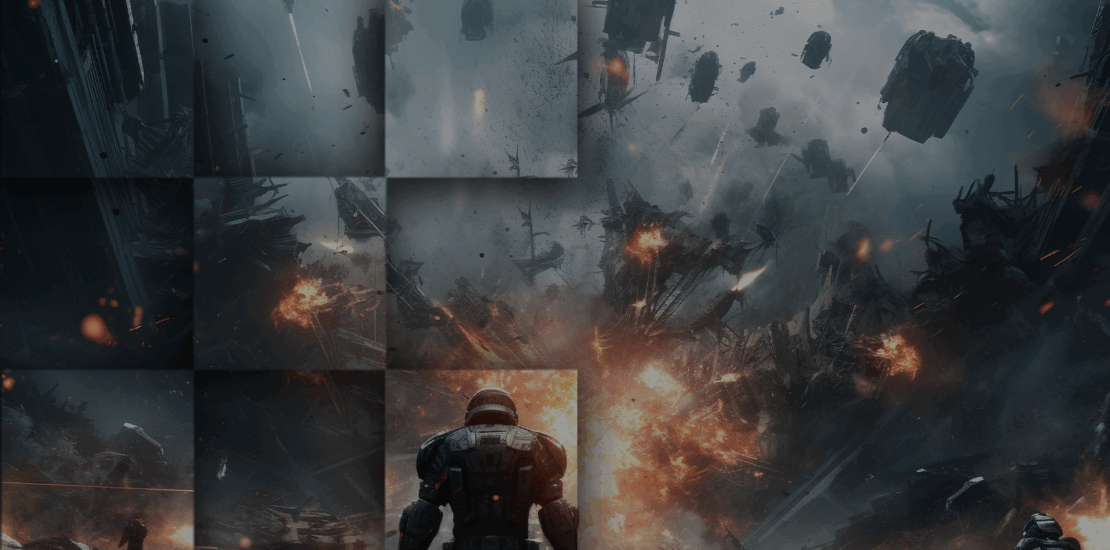
Live-service games aren’t shipped once. They’re shipped continuously. That reality forces producers and art leaders to deliver a steady cadence of cosmetics, events, UI updates, environments, and VFX, often across multiple platforms and performance budgets. The core risk isn’t just output volume. It’s what that speed can quietly accumulate: technical debt.
When assets arrive inconsistently in naming, materials, pivots, texel density, and LODs, the cost shows up later as integration friction, performance regressions, visual inconsistency, and rework that drags down delivery velocity. In practice, “cheap” art becomes expensive when senior technical talent is pulled into repairs rather than building features and improving the pipeline.
Scalable game art services solve for more than capacity. They function as production infrastructure, with standardized execution, engine-aware authoring, automated validation, and clean handoffs that reduce downstream cleanup. The goal is simple: higher throughput without rework, regressions, or drift, season after season.
Contents
Creative Foundations That Survive Change
If you want scale, you start at the concept phase, not the model phase. The biggest pipeline killer is concept art that looks great but can’t survive live ops. Scalable concepting is modular by design, with rules that anticipate future variants, seasonal swaps, and kit reuse.
Here’s what high-maturity foundations look like:
- Modular concept breakdowns (interchangeable armor plates, weapon attachments, environment modules) so production can recombine proven parts instead of reinventing new ones every sprint. That protects consistency while accelerating throughput.
- Concepting over greybox/blockout (designing directly on top of gameplay metrics and blockout volumes). This prevents “pretty but unplayable” environments by respecting collision boundaries, sightlines, traversal readability, and gameplay scale from day one.
- Variant trees that define approved expansion paths (rarity tiers, faction styles, seasonal palettes, damage states). This keeps the catalog growing without creative drift or endless re-briefing.
- Style-bible governance treated as a living, versioned system (materials language, edge logic, shape grammar, value range, UI tone). This stops visual drift across months of content and across multiple internal and external teams.
- VFX callouts in concept (emitter points, socket locations, swing arcs, impact zones, timing notes). This saves downstream VFX and tech-art hours because intent is captured early and implemented once, correctly.
The goal is simple: concepts that are production-ready, not just presentation-ready.
Once those rules are governed, scale becomes a production problem: building repeatable systems that keep output high without rework.
Production at Velocity
High output doesn’t come from hero-by-hero craftsmanship. It comes from repeatable production units, systems that let artists produce more content without reinventing decisions.
Scalable game art services typically establish:
- UI kits (reusable buttons, frames, icon containers, typography rules, spacing grids). That keeps UI consistent across events and reduces rework when the live calendar demands rapid layout changes.
- Sprite/atlas strategy designed for batching and memory (sprite sheets, atlas grouping rules, predictable packing). That reduces runtime overhead and helps prevent UI hitching when event content spikes.
- Batchable prop pipelines (shared trim sheets, shared material sets, modular geometry conventions). That increases content volume without ballooning uniqueness, which is the fastest route to memory bloat.
- Project-specific Smart Materials (Substance Painter/Designer libraries for leathers, metals, paints, fabrics that match the game’s PBR response). That delivers instant consistency at speed, because new assets inherit the studio’s exact surface language.
- Master Material Hierarchies (parameter-driven master materials where variants are texture/parameter swaps, not shader rebuilds). That prevents shader compilation stalls and avoids variant explosions late in production, especially when cosmetics scale into the hundreds.
Velocity is only valuable when it doesn’t create downstream debt. These systems keep output high and cleanup low.
Next comes the reality of shipping everywhere: the same content must remain readable, functional, and recognizable across wildly different screens.

Cross-Platform Readability
Scaling content across platforms isn’t just about resolution; it’s about Recall. Can a player instantly parse what matters, at a glance, on any screen?
Strong game art services enforce:
- Silhouette-first design (clear shapes at gameplay distances). That protects gameplay readability on handheld screens and in chaotic encounters.
- Value/contrast discipline (controlled midtones, highlights that communicate function). That reduces visual noise and prevents “everything blends together” feedback.
- Text and icon legibility rules (minimum sizes, line weights, contrast targets). That avoids late-stage UI rework and improves readability across a wide range of devices.
- Accessibility checks (color safety for common forms of color vision deficiency, contrast validation, safe palettes). That broadens usability and reduces compliance-driven redesign late in QA.
- DPI and UI scaling standards. That keeps interfaces stable and sharp without per-platform patching.
Readability failures show up as churn, frustration, and missed cues, and they are often misdiagnosed as “game feel” problems.
But readability is only half the battle. Assets also have to survive the engine, including materials, shaders, imports, and build constraints, without creating integration debt.
Engine-Ready Assets
The difference between good art and shippable art is engine awareness. Scalable game art services don’t deliver a pretty file and hope for the best. Instead, they deliver assets that respect your rendering stack and build constraints.
That means:
- Material logic aligned with your engine (shader graphs, material slot discipline, naming and parameter conventions). That reduces tech-art rebuild time and avoids material chaos during integration.
- Shader limits and variant control (instruction counts, keyword explosion, permutation management). That prevents shader compilation stalls and keeps performance predictable as content scales.
- Instancing discipline (shared materials, consistent mesh setups, prefab/pipeline rules). That reduces draw-call overhead and improves stability in content-heavy scenes.
- Compression choices per platform (ASTC/BCn/ETC strategies, mip rules, normal map settings). That prevents platform-specific artifact regressions and stops memory waste from “one-size-fits-all” compression.
Engine-ready isn’t a feature. It’s the baseline that keeps integration from becoming a silent budget leak.
And even perfect imports don’t guarantee smooth frames: performance has to be authored intentionally, not “optimized later.”
Performance by Design
Performance debt is the silent killer of live games. One “small” cosmetic update that ignores budgets can cascade into frame dips, memory spikes, streaming stutters, and emergency optimization sprints.
A performance-first art service bakes these decisions into authoring:
- Texel Density Standardization (strict pixel-per-meter ratios, category-based exceptions). That keeps the game visually consistent and prevents the whiplash of “some assets are razor sharp, others are mushy.”
- LODs planned during modeling (not auto-generated at the end). That prevents silhouette popping and reduces LOD transition stutters, keeping gameplay readable at distance.
- Draw-call batching strategy (not just “atlas everything”). That avoids death-by-uniqueness and reduces state changes that hurt performance, especially on lower-end hardware.
- Avoiding unique textures for small props (trim sheets, shared materials, decals, parameter variation). That saves memory and improves streaming stability, particularly during asset-heavy seasonal drops.
- Shader complexity & overdraw visualization (Shader Complexity view modes and Quad Overdraw checks, especially for foliage and VFX). That prevents GPU blowups from transparent stacks where a “simple” effect quietly becomes the most expensive thing on screen.
- Occlusion-friendly environment planning (chunking, occluders, sensible interior/exterior splits). That improves culling efficiency and reduces GPU/overdraw pressure in complex spaces.
- Asset conditioning in CI (automatic checks on tris, material slots, texture sizes, naming, pivots, LOD presence, compression rules). That stops regressions before they enter a build, protecting both performance and schedule.
If the pipeline is designed for budgets, you can add content forever without paying a performance tax every sprint.
The final step is making quality repeatable. Scalable teams don’t rely on heroics; they rely on automated validation and focused human review.

Automated Validation & Tech-Art Scripting
Manual review alone doesn’t scale. You need automation that enforces standards consistently, and human review that focuses on what matters: what the player actually sees.
High-maturity pipelines combine:
- Automated validation scripts that reject assets when pivots are wrong, naming fails, budgets are exceeded, LODs are missing, or material slot rules are violated. That removes avoidable cleanup work and keeps senior tech artists focused on meaningful improvements instead of repetitive fixes.
- Visual diffing between iterations (render snapshots or in-engine captures). That catches unintended regressions early, before they turn into expensive late-cycle surprises.
- Artifact checks (mip issues, compression artifacts, normal seam errors, shader banding). That reduces QA churn and prevents the dreaded “only happens on one platform” scramble.
- Player-view approval passes (gameplay camera distances, motion, UI overlays, real lighting). That keeps decisions grounded in the experience, not the portfolio angle.
This is how quality becomes repeatable instead of heroic.
But even perfect assets can stall production if delivery is clunky: handoff needs to preserve momentum, not reset it.
Handoff Without Friction
The handoff is where momentum goes to die unless delivery is treated as integration. Scalable game art services don’t throw assets over the wall; they plug directly into your production reality.
That includes:
- Clear versioning discipline (source vs export separation, naming conventions, changelogs). That eliminates “which file is latest?” stalls and prevents lost work.
- Standard interchange formats (FBX/USD where appropriate, engine-native prefabs, consistent skeleton/rig standards). That reduces import errors and prevents reassembly inside the project.
- Tight feedback loops between art direction, tech art, design, and production. That keeps iteration cheap by catching misalignment early.
- Direct-to-engine commits (client-approved Perforce/Git workflows, branch rules, validation inside the actual project). That removes the zip-file bottleneck and ensures assets land already tested in real build context.
Frictionless handoff is how you keep live-service cadence without sacrificing stability.
Stop Scaling Burnout. Start Scaling the System.
The best game art partners do more than produce assets. They protect the pipeline, reducing the hidden costs of technical debt, smoothing integration, and preserving both visual consistency and performance as the release cadence accelerates. That is what scale looks like in a live environment: more output, fewer regressions, and less rework.
If your team is spending meaningful time on cleanup, the problem is rarely effort. It is process. Standards that are inconsistently applied, assets that are not authored for the engine, and handoffs that push fixes onto senior staff all create compounding drag.
A practical next step is a pipeline audit, focused on where rework is introduced, where performance risk enters, and which standards and automated checks will improve throughput without compromising style or frame time. In live service, velocity is not a sprint. It is an operational discipline.