

From Sketches to Game Worlds — The Art of Game Creation
- August 8, 2025
- Posted by: iXie
- Category: Game Art
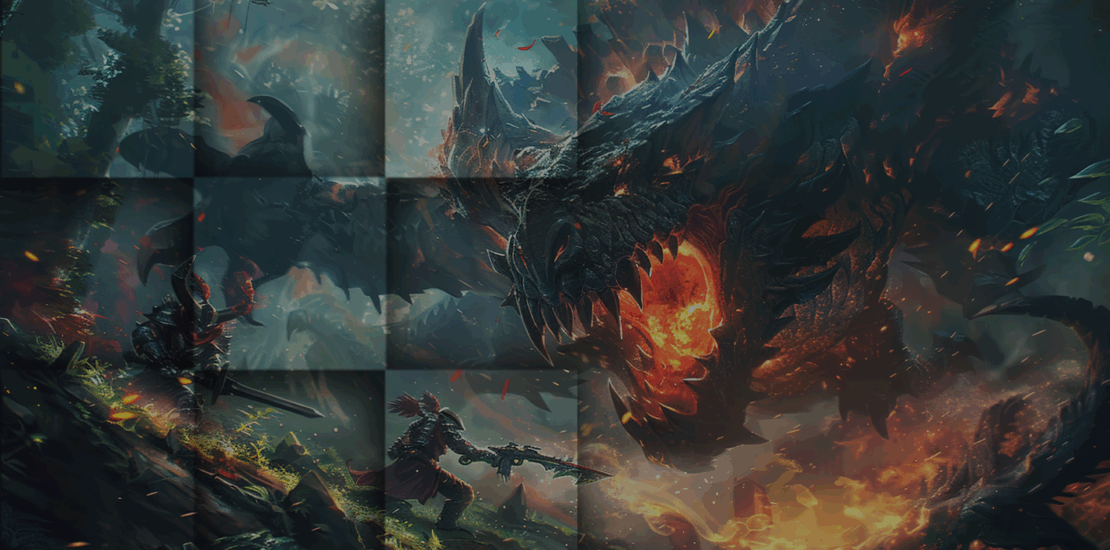
Ever wondered how the stunning visuals of your favorite video games come to life? It’s far more than just lines of code or compelling narratives.
Game creation is a collaborative symphony of artistry, design thinking, and meticulous production, transforming initial raw sketches into the immersive, playable worlds we explore.
At the very heart of this intricate process are game art production companies. These studios, with their highly structured teams and disciplined workflows, are the unseen architects who breathe visual life into every title.
In this guide, we’ll pull back the curtain, taking you on a journey from fleeting concept sketches to polished 3D models, revealing why unwavering production discipline is the cornerstone of excellence in modern game development.
Contents
- 1 How Game Art Production Companies Structure Their Teams
- 2 The Step-by-Step Workflow: Concept to Final Asset
- 3 Tools and Techniques That Define Top-Tier Production
- 4 Cross-Functional Collaboration with Game Developers
- 5 Revisions, QA, and Asset Delivery: What Happens Behind the Scenes
- 6 Studio Spotlights: Examples of Art-Driven Game Success Stories
- 7 Conclusion: Why Workflow Discipline Separates Good from Great Studios
- 8 FAQs
How Game Art Production Companies Structure Their Teams
Building these complex visual experiences requires highly specialized yet intrinsically cross-functional teams. Game art production companies structure their talent to ensure a seamless, efficient flow from initial ideation to final execution:
- Art Director: Sets the overall visual tone and artistic direction, ensuring every asset aligns with the game’s vision.
- Concept Artists: Develop moodboards, sketches, and visual references to bring early ideas to life and guide further asset creation.
- 3D Modelers & Sculptors: Translate 2D concepts into fully realized 3D assets using tools like ZBrush, Blender, or Maya.
- Texture & Material Artists: Add depth and realism with detailed textures, leveraging tools such as Substance Painter to simulate materials and surfaces.
- Rigging & Animation Specialists: Rig characters with skeletal systems and animate them for lifelike movement.
- Technical Artists: Ensure that all assets are optimized for performance and compatibility with the game engine.
- QA Artists: The guardians of visual quality, they rigorously test assets for technical flaws like polygon count, LODs, topology, and shading errors, ensuring seamless engine compatibility and optimal performance.
The Step-by-Step Workflow: Concept to Final Asset
From a spark of an idea to a fully integrated asset, a disciplined workflow is paramount. This meticulous, step-by-step process ensures creative visions evolve into technically robust elements, ready to populate the game world.
1. Creative Briefing & Style Guides
This foundational step is crucial for establishing a cohesive aesthetic across the entire project. It defines visual goals, themes, art direction, platform requirements, and technical specifications.
2. Concept Art Creation
Artists sketch early designs for characters, environments, and props to visualize mood, color palette, and style. These are aligned with gameplay mechanics and storytelling elements.
3. Blocking & Modeling
This initial modeling phase, often called “blocking out,” focuses on establishing the core form, silhouette, and volume, serving as the blueprint for detailed work.
4. UV Mapping & Texturing
Modern Physically Based Rendering (PBR) workflows are critical here, ensuring materials react realistically to light within the game engine. Artists unwrap 3D models and apply textures to define surface detail.
5. Rigging & Animation
Characters are rigged with bones and controls, then animated with lifelike motions, whether for gameplay, cutscenes, or environmental interactions.
6. Lighting & Integration
Assets aren’t just created in a vacuum; they’re rigorously tested in diverse lighting conditions to ensure visual consistency, particularly in dynamic environments like open-world or day-night cycles.
7. Final QA & Delivery
Assets undergo final review for both visual fidelity and technical compliance. Once approved, they’re exported for integration into the game engine.
Tools and Techniques That Define Top-Tier Production
To achieve world-class results, professional-grade studios leverage a robust suite of industry-standard software and proprietary tools:
- Modeling & Sculpting: Blender, Maya, 3ds Max, ZBrush
- Texturing & Surfacing: Substance Painter, Quixel Mixer
- Rigging & Animation: Autodesk Maya, Spine, Mixamo, Houdini
- Rendering & Visualization: Marmoset Toolbag, Unreal Engine
- Collaboration: ShotGrid, Jira, Asana, SyncSketch
- AI Tools: Increasingly used for rapid concept art iteration, intelligent upscaling, and even smart rigging, AI tools are rapidly transforming aspects of the art pipeline.
Beyond off-the-shelf software, top studios often develop custom shader libraries, sophisticated VFX pipelines, and precise GPU budget trackers to ensure real-time performance remains flawless.
Cross-Functional Collaboration with Game Developers
In game development, art never exists in isolation. Seamless, tight-knit collaboration and constant feedback loops between artists and developers are absolutely essential for a successful outcome:
- Engine Optimization: Technical artists work hand-in-hand with programmers to optimize assets, ensuring they remain within critical memory and draw call limits for smooth performance.
- Shader Compatibility: Artists and developers collaborate to create and implement custom shaders tailored to visual effects or gameplay mechanics.
- Physics & Animation Syncing: Animators coordinate with physics programmers to ensure character or object movements behave naturally in gameplay.
- Level Design Iterations: Environment artists are constantly refining scale, lighting, and geometry, iterating closely with level designers to enhance gameplay flow and visual impact based on playtesting feedback.
Revisions, QA, and Asset Delivery: What Happens Behind the Scenes
The path to final game art delivery is rarely linear. Rather, it’s a dynamic, iterative process where studios undergo multiple rounds of refinement before reaching that crucial final sign-off.
- Internal Review Loops: Leads review and critique ongoing work for quality, consistency, and alignment with creative direction.
- Tech QA: Assets undergo rigorous checks for proper topology, UV mapping, LOD integration, and engine compatibility.
- Build Testing: Critically, assets are integrated into live development builds, allowing teams to test their behavior, performance, and visual fidelity under real-time game conditions.
- Version Control: Systems like Perforce or Git ensure collaborative work remains organized and reversible.
- Delivery Packages: The final output includes comprehensive packages with all necessary asset formats (FBX, OBJ, textures, shaders), accompanied by thorough documentation to ensure seamless engine ingestion and integration.
Studio Spotlights: Examples of Art-Driven Game Success Stories
To truly understand the impact of disciplined art pipelines, let’s explore how they’ve contributed to the success of acclaimed titles:
- Airship Syndicate (Battle Chasers, Darksiders Genesis): Leveraged a tight concept-to-model pipeline to deliver a stylized, comic book aesthetic while maintaining real-time performance.
- Virtuos (AAA Co-Dev Studio): Contributed 3D assets to franchises like Assassin’s Creed and Final Fantasy through highly scalable, QA-driven workflows.
- Playrix (Mobile Game Studio): Maintained consistent art updates for live games like Gardenscapes using modular asset systems and versioned content pipelines.
Conclusion: Why Workflow Discipline Separates Good from Great Studios
Ultimately, the breathtaking artistry of game creation flourishes not merely on raw talent, but on unwavering structure, crystal-clear communication, and relentless iteration.
Behind every stunning character, every sprawling landscape, and every immersive world lies a meticulous pipeline that meticulously transforms abstract ideas into interactive beauty.
Studios that deeply invest in workflow precision, seamless cross-team integration, and rigorous QA aren’t just surviving in the fiercely competitive gaming market – they are setting new benchmarks for excellence.
In conclusion, great game art isn’t a happy accident; it is painstakingly built, rigorously tested, and polished with an undeniable purpose.
So, the question is, does your studio have the workflow discipline to turn ambition into art?

FAQs
They operate with specialized roles such as art directors, concept artists, modelers, animators, and technical artists, each contributing to a synchronized pipeline that transforms ideas into production-ready assets.
From concept sketches to 3D modeling, texturing, rigging, animation, QA, and asset delivery, each step is guided by style guides, milestones, and build-ready formats.
Studios perform visual checks, topology and LOD validation, lighting tests, and engine integration reviews, often using custom QA scripts and build testing environments.
Blender, Maya, ZBrush, Substance Painter, Unreal Engine, and collaboration tools like ShotGrid, Jira, or SyncSketch are standard across top-tier studios.
2D character studios focus on hand-drawn frame creation and sprite optimization, while 3D teams work with sculpting, rigging, real-time shaders, and in-game physics syncing. Each follows distinct pipeline requirements.